
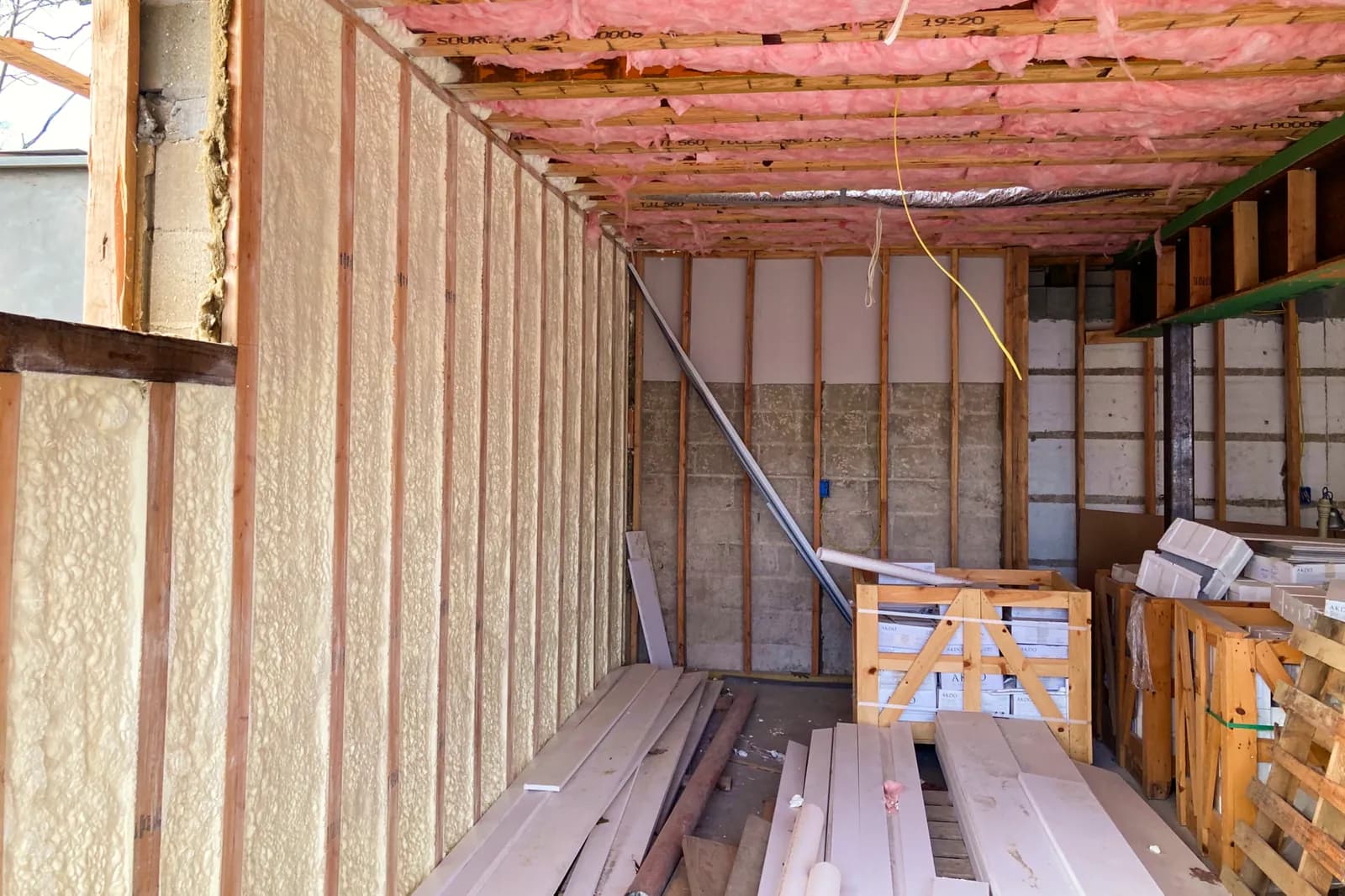
Spray foam comes in two forms, and choosing between them is the single most important decision in an insulation project. They go on looking similar, but they behave very differently once cured. Here's how we decide which one belongs in your home.
Open-cell foam: soft, breathable, and quiet
Open-cell foam is light and spongy. Its cells aren't fully sealed, which lets the material stay flexible and makes it excellent at absorbing sound. It expands dramatically on application, so it fills irregular cavities and hard-to-reach gaps with ease.
We often recommend open-cell for interior walls and attic roof decks where sound control matters and moisture isn't a direct concern. It delivers a strong air seal at a lower cost per board foot than closed-cell.
Closed-cell foam: dense, rigid, and water-resistant
Closed-cell foam cures hard. Its tightly packed cells block air and water vapor, and they add real structural rigidity to the assembly. It delivers a higher R-value per inch, which makes it the right choice where space is tight.
- Crawl spaces and rim joists, where moisture is a risk
- Roof decks in tight rafters that need maximum R-value per inch
- Any space that benefits from added structural strength
So which does your home need?
In practice, many homes use both, closed-cell where moisture and space are concerns, open-cell where sound and cost lead. The only way to know for sure is to look at your specific space. That's exactly what our free assessment is for: we inspect, measure, and recommend the material that fits, never the one that pads the invoice.
The two foams, side by side
| Open-cell | Closed-cell | |
|---|---|---|
| Feel when cured | Soft and flexible | Hard and rigid |
| On application | Expands a lot; fills irregular cavities and rafter bays | Expands less; lies in a thin, dense layer |
| R-value per inch | Lower | The highest we install |
| Moisture | Not for spaces with direct moisture | Resists water and vapor |
| Sound | Excellent at deadening sound | Some, but not its strength |
| Structure | Stays flexible | Adds rigidity to the framing |
| Cost per board foot | Lower | Higher |
| Best for | Interior walls, roof decks, finished attics | Crawl spaces, rim joists, tight rafters, below grade, metal buildings |