
Attic Insulation
The attic is where Connecticut homes lose the most heat. We air-seal the attic floor, correct the thin spots, and bring the whole space up to full R-value with spray foam, blown-in, or both.
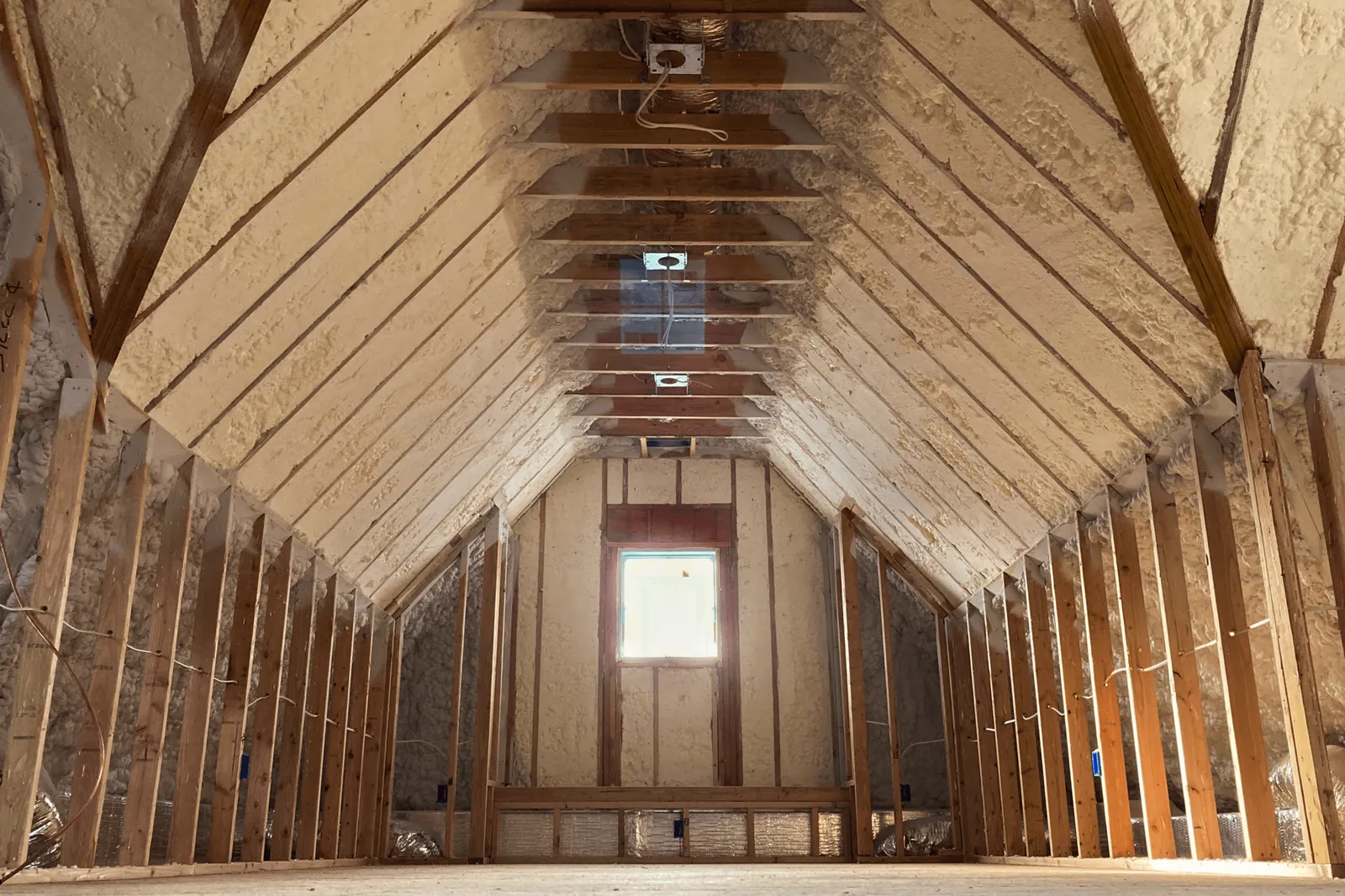
Why homeowners choose it
- Air-seal first, then insulate, the order matters
- Corrects ice dams, drafts, and rooms that never hold heat
- Sized to your home, with the right material for each space
Two kinds of attic, two different jobs
Heat rises, and in most Connecticut houses it leaves through the attic: the hatch, the top plates where the walls meet the attic, recessed lights, bath fans and every pipe and wire through the ceiling. That air carries the heat you paid for into the attic, and in a snow year it warms the roof deck and feeds the ice dams at the eaves. Insulation slows heat but does nothing about air moving through a gap, so every attic job starts with the seal.
An unfinished attic with a floor gets that floor air-sealed first. Then we correct the thin and settled spots, especially out at the eaves, and bring the whole space up to full R-value with blown cellulose or fiberglass at an even depth. If the old insulation is wet, aged or rodent-damaged, it comes out before anything new goes in, and the same crew seals and reinsulates the space.
A finished attic, a bonus room or a cathedral ceiling has no attic floor to seal, so we spray foam the underside of the roof deck instead: the roof stays cold and the room below stays warm. Open-cell foam fills the rafter bays completely and deadens sound; closed-cell gives the highest R-value per inch where the rafter bays are tight. Knee walls and dropped soffits are part of the same seal. Ventilation matters too, but it comes after the sealing, because venting an unsealed ceiling pulls even more warm air up through it.
How we install it
Look at the whole attic
How much insulation is there and what condition it is in, whether the hatch, top plates and penetrations are sealed, and whether the knee walls and roof deck are insulated at all. You get a clear quote with the material for each space.
Clear out what has to go
Wet, aged or rodent-damaged insulation is removed and bagged, and the space is cleaned down before anything new goes in.
Seal, then insulate
We close the hatch, the top plates and every pipe, wire and duct through the ceiling, then blow cellulose or fiberglass across the floor, or spray foam the roof deck in a finished attic.
Leave it cleaner than we found it
We cover the rooms we work through and the path to the attic, and the house is cleaner when we leave than when we arrived.
Questions homeowners ask
Why do you air-seal the attic before insulating it?
Because insulation slows heat; it does not stop air. Warm air leaving through the top plates, the penetrations and the attic hatch carries the heat with it and melts the snow that turns into ice dams at the roof edge. We close those paths first so the insulation performs the way it was rated to.
Spray foam or blown insulation for my attic?
It depends on how the attic is used. An unfinished attic with a flat floor usually gets air sealing and blown cellulose or fiberglass on the floor. A finished attic, bonus room or cathedral ceiling gets spray foam on the roof deck so the space itself is conditioned. Often one house gets both.
What are the signs my attic is the problem?
Ice dams at the roof edge, an upstairs that bakes in summer and freezes in winter, a furnace that never rests, cold floors and drafts near the ceiling, and dust that keeps coming back. Two or more together and the attic is almost certainly the culprit.
Will insulating the attic stop my ice dams?
It fixes the cause. An ice dam forms when heat escaping from the house warms the roof above the living space while the eaves stay below freezing. Roof rakes and heat cables treat the symptom; sealing the ceiling and bringing the insulation up to full depth stops the heat from reaching the roof deck. Note where the ice forms: the heat is escaping on the roof above it.
Do you take out the old insulation first?
When it needs to come out, yes. Wet, aged or rodent-damaged insulation belongs out of the house before new material goes in. We remove and bag it, clean the space down, and the same crew seals and reinsulates the attic, so it is never left half done. We tell you at the assessment whether yours needs to go.
Should I add attic vents instead?
Not as a first step. Ventilation matters, but it comes after the sealing. Venting an attic before the ceiling is sealed can pull even more warm house air up into it, and the heat loss and the ice dams carry on. Seal first, then insulate, then look at the ventilation.
Where we do this
Based on Federal Road in Brookfield, working across western Connecticut and the New York border.
Best for
Attic floors, roof decks, knee walls, bonus rooms
Not sure if attic insulation is right for your space? We'll assess your home and recommend the material that actually fits.
Request an estimateRelated services
Done properly the first time.
Request an estimate and we'll assess your home or building, specify the right material for each space, and give you a clear plan. On time, and spotless when we leave.