
Closed-Cell Spray Foam
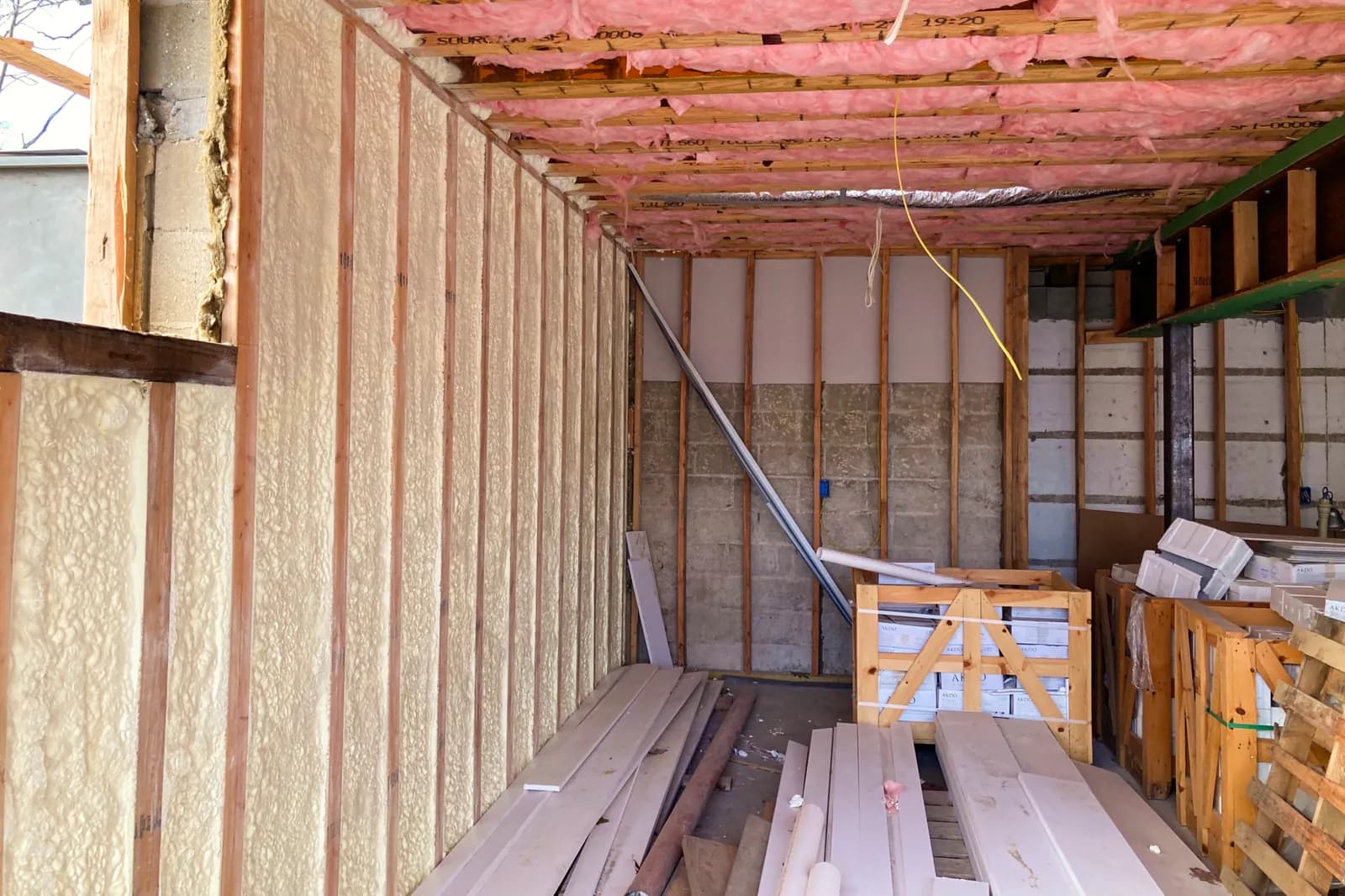
A dense, rigid foam that delivers the highest R-value per inch and resists water. It adds stiffness to the structure and stands up to ground moisture, which makes it the standard for crawl spaces, rim joists, and tight rafter bays.
Why homeowners choose it
- The highest R-value per inch, in a thin profile
- Resists water and adds structural rigidity
- Specified where moisture and space are both tight
How we install it
In-home assessment
We inspect your attic, walls, or crawl space and find exactly where your home is leaking energy.
A clear, fair quote
You get a straightforward plan and price, the right material for each space, no upsell.
Clean, expert install
Our expert crew seals the envelope, protects your home throughout, and leaves it spotless.
Open-cell vs. closed-cell, side by side
| Open-cell | Closed-cell | |
|---|---|---|
| Feel when cured | Soft and flexible | Hard and rigid |
| On application | Expands a lot; fills irregular cavities and rafter bays | Expands less; lies in a thin, dense layer |
| R-value per inch | Lower | The highest we install |
| Moisture | Not for spaces with direct moisture | Resists water and vapor |
| Sound | Excellent at deadening sound | Some, but not its strength |
| Structure | Stays flexible | Adds rigidity to the framing |
| Cost per board foot | Lower | Higher |
| Best for | Interior walls, roof decks, finished attics | Crawl spaces, rim joists, tight rafters, below grade, metal buildings |
Questions homeowners ask
Why is closed-cell foam the standard for crawl spaces and rim joists?
Because it resists water. Its dense, closed structure blocks air and water vapor, adds stiffness to the framing and stands up to ground moisture, which is exactly what a vented crawl space or a cold rim joist needs.
Does closed-cell foam need as much thickness as other insulation?
No. It delivers the highest R-value per inch of anything we install, so it fits where space is tight: rafter bays, rim joists and framed walls that cannot be built out.
Is closed-cell foam used on commercial buildings too?
Yes. It bonds to steel and stops condensation on the panels, which is why we specify it for metal buildings, warehouses and pole barns as well as for homes.
Where we do this
Based on Federal Road in Brookfield, working across western Connecticut and the New York border.
Best for
Crawl spaces, rim joists, tight rafters, below grade
Not sure if closed-cell spray foam is right for your space? We'll assess your home and recommend the material that actually fits.
Request an estimateDone properly the first time.
Request an estimate and we'll assess your home or building, specify the right material for each space, and give you a clear plan. On time, and spotless when we leave.