
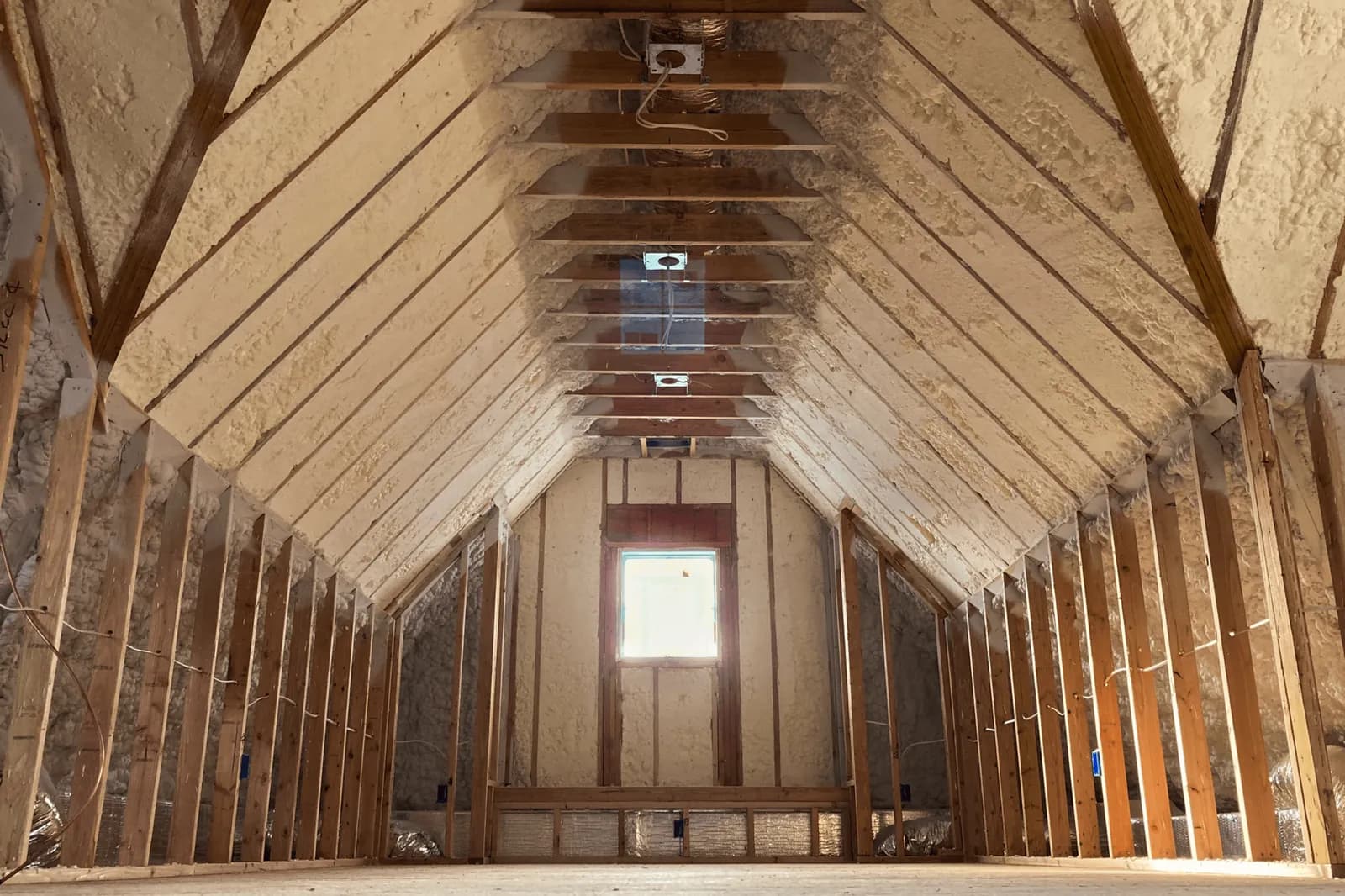
Your attic is where most homes quietly hemorrhage energy. Heat rises, finds the gaps, and escapes, dragging your heating dollars with it. The good news: your house tells you when the attic is the problem. Here are the signs we hear about most.
1. Ice dams on the roof edge
Ridges of ice at the eaves mean warm air is escaping into the attic, melting snow that refreezes at the cold edge. It's one of the clearest signals of a poorly sealed attic, and it can damage your roof.
2. Rooms that never match
If the upstairs bakes in summer and freezes in winter while the main floor stays comfortable, the attic envelope is leaking.
3. A furnace that never rests
Constantly cycling equipment is chasing heat that keeps escaping. Seal the attic and the system finally gets to rest.
4. Cold floors and drafts near the ceiling
Air leaving through the attic has to be replaced, so colder air is pulled in low: through the rim joist, the basement and the gaps around the floor. The drafts you feel up near the ceiling are the same air on its way out.
5. High and climbing energy bills
If the bills are rising faster than the rates, the house is losing more heat than it used to. Insulation that has settled or been disturbed, and attic air leaks that have opened up over the years, are the usual reasons.
6. Daylight or gaps around the attic hatch
If you can see light around the hatch or feel air at its edges, it is an open door to the attic. The hatch is one of the biggest single leaks in a house and one of the easiest to seal.
7. Dust that keeps coming back
Dust that reappears no matter how often you clean is often insulation fibers and attic dust carried in on air leaking down through ceiling penetrations and light fixtures. Sealing those paths cleans up the air as well as the bills.
What to do about it
Any one of these on its own is worth a look. Two or more together, and your attic is almost certainly the culprit. A free assessment pinpoints exactly where the air is moving and what it will take to stop it: air sealing first, then the right insulation for how the attic is used.