
Most calls we get start the same way: the upstairs is cold, the bills are high, and the house needs more insulation. Often it already has insulation. What it is missing is a seal. Insulation slows heat moving through a material. It does nothing about air moving through a gap, and in most Connecticut houses the air is the bigger problem.
What air sealing is
Air sealing is finding and closing the hidden paths air takes through a house: the top plates where the walls meet the attic, every pipe, wire and duct penetration through the ceiling, the attic hatch, the rim joist where the floor framing meets the foundation, and the bypasses around chimneys and dropped soffits. It is its own discipline, not a step to rush on the way to the insulation.
Why the order matters
Blown insulation laid over a leaky attic floor still lets warm air through. That air carries the heat you paid for into the attic, and the moisture in it goes along. In winter the moisture condenses on the cold roof deck; in a snow year the heat melts the snow above and feeds the ice dams at the eaves. Insulation only performs the way it was rated to once the air movement stops, which is why we seal first and insulate second, never the other way around.
The U.S. Department of Energy's Guide to Air Sealing calls air sealing one of the most cost-effective ways to improve a home's comfort and energy efficiency, and points out that the small, hard-to-find leaks in the attic of an existing home are often buried under the insulation that is already there.
Source: U.S. Department of Energy, Guide to Air Sealing (PDF)
Where a house leaks the most
- The attic: the hatch, the top plates, and every pipe, wire, duct and light fixture that passes through the ceiling
- The rim joist, where the floor framing sits on the foundation, in the basement or the crawl space
- Dropped soffits, chases and knee walls in finished attics and bonus rooms
- The gaps inside finished walls, around windows, and where an addition meets the original house
What spray foam does differently
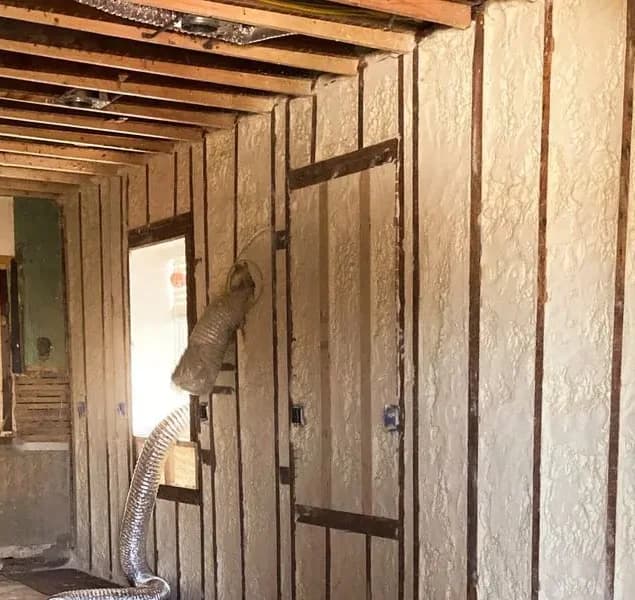
Spray foam seals and insulates in one pass. It expands into the gap, bonds to the framing and cures into one continuous barrier, so a roof deck, a rim joist or a crawl space wall gets its air seal and its R-value at the same time. On an attic floor that is getting blown cellulose or fiberglass instead, we seal the floor first, then blow the insulation over it.
What changes once the house is sealed
Steadier temperatures from room to room, a quieter house, less dust, and a furnace or air conditioner that runs less, because the heating and cooling you pay for stays inside. Most residential attic or crawl space jobs are finished in a single day.
Where to start
Start with an in-home assessment. We look at the attic, the walls and the crawl space, find where the house is leaking, and give you a clear quote with the right material for each space. Sealed first, then insulated, is the whole job.