
Once the heat comes on for the season, a lot of Connecticut houses show the same symptom. The first floor stays cold underfoot, and you feel a draft at your ankles along the outside walls. Most people check the windows first. The air usually comes in below them, at the rim joist in the basement or crawl space.
Why the floors get colder when the heat comes on
Warm air rises. In winter the heated air in your house pushes up and out through the leaks in the attic: the hatch, the top plates, recessed lights and the pipes and wires that pass through the ceiling. The air that leaves has to be replaced, and the house pulls the replacement in low, through the rim joist, the basement and the gaps around the floor. The colder the night, the harder that pull, so the draft at floor level peaks when you least want it.
ENERGY STAR calls this the chimney effect: leaks in the attic draw outside air in through leaks in the basement. Its guide to sealing a basement says to finish the job there after the attic, and it lists the gap between the sill plate and the foundation, and the top and bottom of the rim joist, among the places to seal.
Source: ENERGY STAR, Sealing Air Leaks: Basement
What the rim joist is
The rim joist is the band of wood that runs around the top of the foundation, where the floor framing sits. Go down to the basement and look up at an outside wall. You will see the ends of the floor joists resting on the sill plate, with a pocket between each pair, and the rim joist closing off the end of each pocket. Cold outside air meets the house right there, and it is rarely sealed.
What to look for down there
- First-floor rooms that feel cold underfoot even when the thermostat is satisfied
- A draft along the baseboards on the outside walls
- Old batts pushed into the rim joist pockets, often dusty, dark or sagging
- Damp or musty air in the basement or crawl space
Batts in the rim joist pockets are the most common thing we find. They slow heat, but air moves through and around them, so the draft keeps coming.
How we seal it
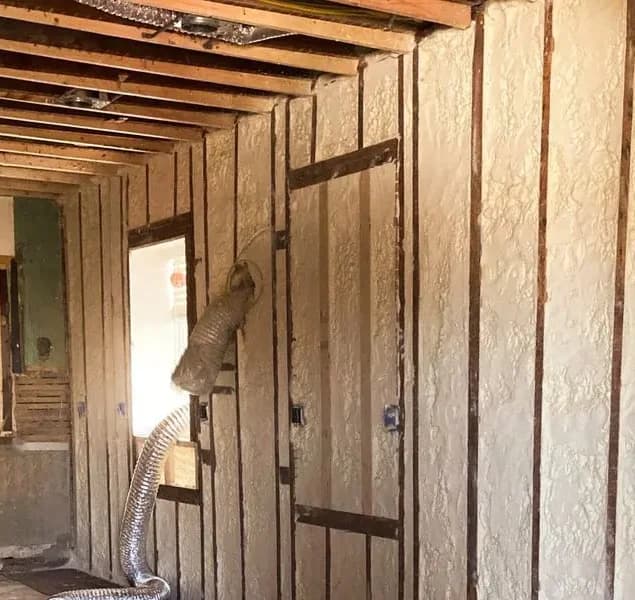
We spray closed-cell foam into each pocket, against the rim and the sill. It seals the air path and blocks moisture in the same layer, and it gives the highest R-value per inch of anything we install, so it fits the shallow pockets without building anything out. Old batts come out first.
The rest of the basement depends on what is there. Below-grade walls can take the same closed-cell foam, which stands up to ground moisture. Framed basement walls get batts cut and fitted to the framing. A crawl space gets closed-cell foam on its walls and rim joists, which keeps out the ground moisture and the damp air that otherwise works its way up into the rooms above.
Do the attic too
Sealing the basement fixes the half of the house where the air comes in. If the attic stays leaky, the house keeps pulling air in low through whatever gaps are left. That is why the rim joist is one of the first places we look when we air-seal a house, right after the attic, and why the two jobs often go together. Most residential attic or crawl space jobs are finished in a single day.
Before the coldest weeks
Take a flashlight down to the basement and look at the rim joist along an outside wall. If you see bare wood, gaps or tired batts, request an assessment. We look at the attic, the walls and the basement or crawl space, find where the house is leaking, and give you a clear quote with the right material for each space. Call (203) 546-7800 or request an estimate online.