Water dripping from the inside of a steel roof on a cold morning looks like a roof leak. If the roof is sound and the drips come with the cold weather, the water is condensation, and it comes from the air inside the building.
Why steel sweats
A steel panel takes on the temperature outside. On a cold night the roof and wall panels drop well below the temperature of the air inside. When warm, moist air meets a surface that cold, the moisture condenses on it, the same way a glass of ice water sweats in July. On the walls it runs down the panels. On the roof it collects on the underside and drips onto whatever is below.
A working building puts a lot of moisture into its air: people, unvented propane or kerosene heaters, trucks and equipment that come in wet from the snow, animals, and the ground under a dirt or gravel floor. Heating the building makes the gap between the warm air and the cold steel bigger.
What the dripping does
- Rust on the panels, the fasteners and the purlins
- Wet stock, tools, equipment and hay under the roof
- Slick floors where people walk and drive
- Old insulation that takes on water and stops working
Two ways to stop condensation
The EPA's guide for schools and commercial buildings gives two ways to prevent condensation: raise the temperature of the surface, or lower the moisture in the air. To raise the surface temperature, it says to insulate.
Source: U.S. EPA, Mold Remediation in Schools and Commercial Buildings Guide, Chapter 2
Fans, vents and dehumidifiers work on the moisture side. They help, but they are hard to keep up with in a building whose doors open all day, with heaters running or animals inside. Keeping the warm air off the cold steel deals with the cause.
Why we use closed-cell foam on steel
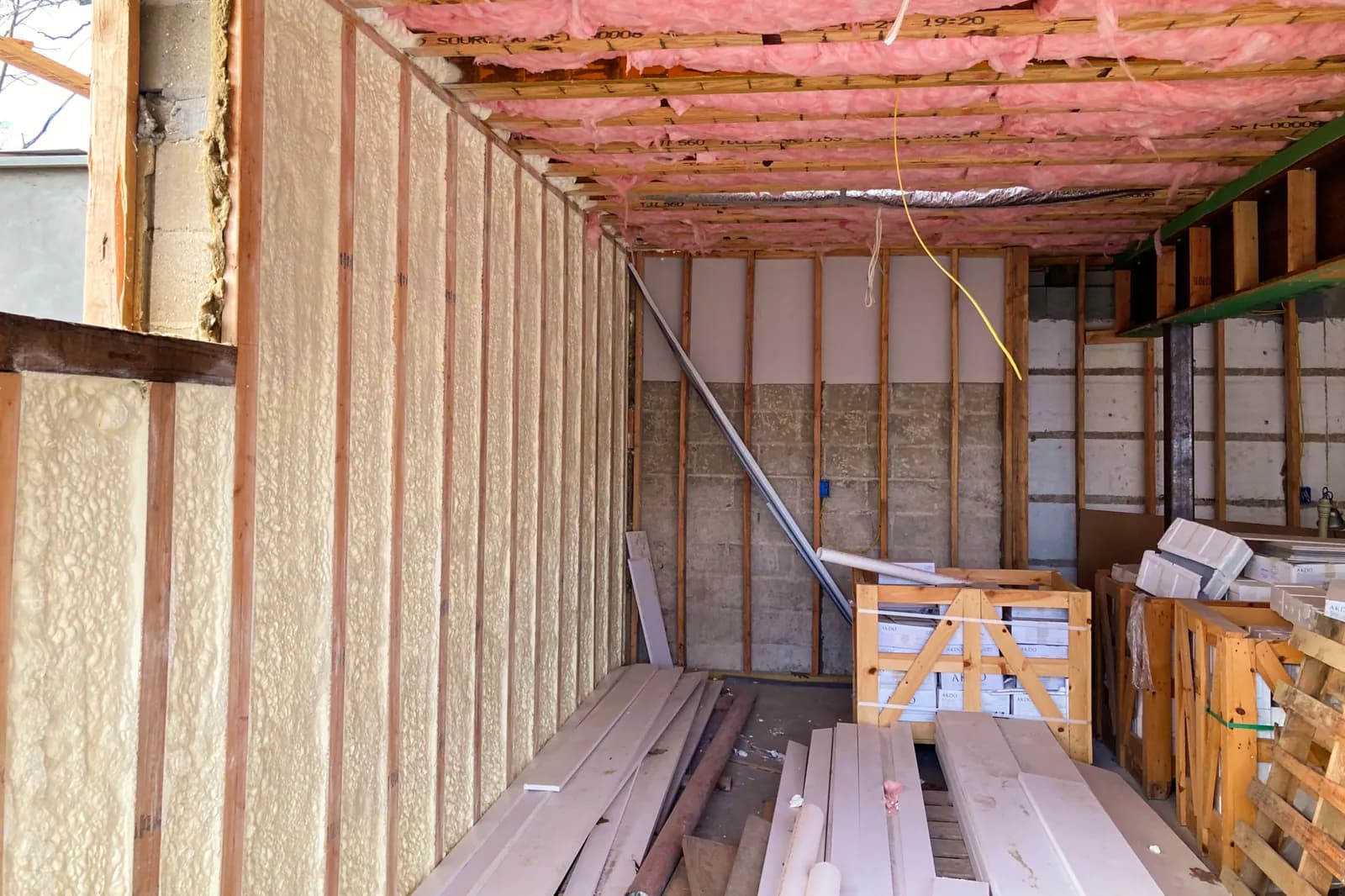
Closed-cell foam sprayed directly onto the panels bonds to the steel, so no pocket is left behind it for moist air to reach the cold metal, and the condensation stops at the source. The same layer seals the seams and fastener gaps that let air through, resists water, and adds rigidity to the panels, across the walls and the roof. It also seals a large envelope quickly.
Any insulation that leaves an air gap against the steel lets warm, moist air reach the cold metal behind it, and the condensation carries on out of sight. Foam that bonds to the panel leaves no gap.
Pole barns and farm buildings
Pole barns have the same problem with more moisture: wide open spans, siding with plenty of gaps, and moisture coming from the ground, the animals and the weather. Closed-cell foam sprayed against the siding seals the gaps, stands up to the moisture and the temperature swings, and stiffens the walls and roof in the same pass, so the building holds its temperature through a Connecticut winter.
Getting a bid
Tell us about the building: the size, what it is used for, and whether it is heated. We walk the building or work from the plans, specify the assembly, and give you a bid with the scope and the schedule, with one point of contact through the bid and the build. SDS sheets and compliance documentation are available on request. Call (203) 546-7800 or request a bid online.