
A ridge of ice along the eaves, icicles the size of your arm, and a stain on the ceiling after the thaw. Connecticut winters bring snow followed by hard cold, and that is exactly the recipe for an ice dam. The ice is on the roof, but the problem is in the attic.
How an ice dam forms
Snow sits on the roof. Heat escaping from the house warms the roof deck over the living space, and the snow above it melts. The water runs down to the eaves, which hang out past the heated walls and stay below freezing, and there it refreezes. Layer by layer a dam builds, the meltwater backs up behind it, and the water finds its way under the shingles and into the attic, the walls and the ceilings.
University of Minnesota Extension puts it plainly: ice dams form when heat loss from the house, snow cover and the outside temperature combine to leave the upper roof above freezing while the edge stays below it, and they can be prevented by controlling the heat loss from the home.
Source: University of Minnesota Extension, Dealing with and preventing ice dams
Where the heat comes from
- Warm air leaking into the attic through the hatch, the top plates, recessed lights, bath fans and every pipe and wire penetration
- Thin, settled or disturbed insulation, especially out at the eaves and around knee walls
- Heating ducts or an air handler running through an unconditioned attic
- Bonus rooms and cathedral ceilings with little room for insulation between the roof and the finish
What does not fix it for long
Roof rakes, heat cables and chipping channels through the ice all treat the symptom. They can get you through a storm, and raking the snow off the lower roof does remove one ingredient, but the attic is still warm and the next snowfall starts the cycle again. Chipping at the ice can also damage the shingles.
What fixes it
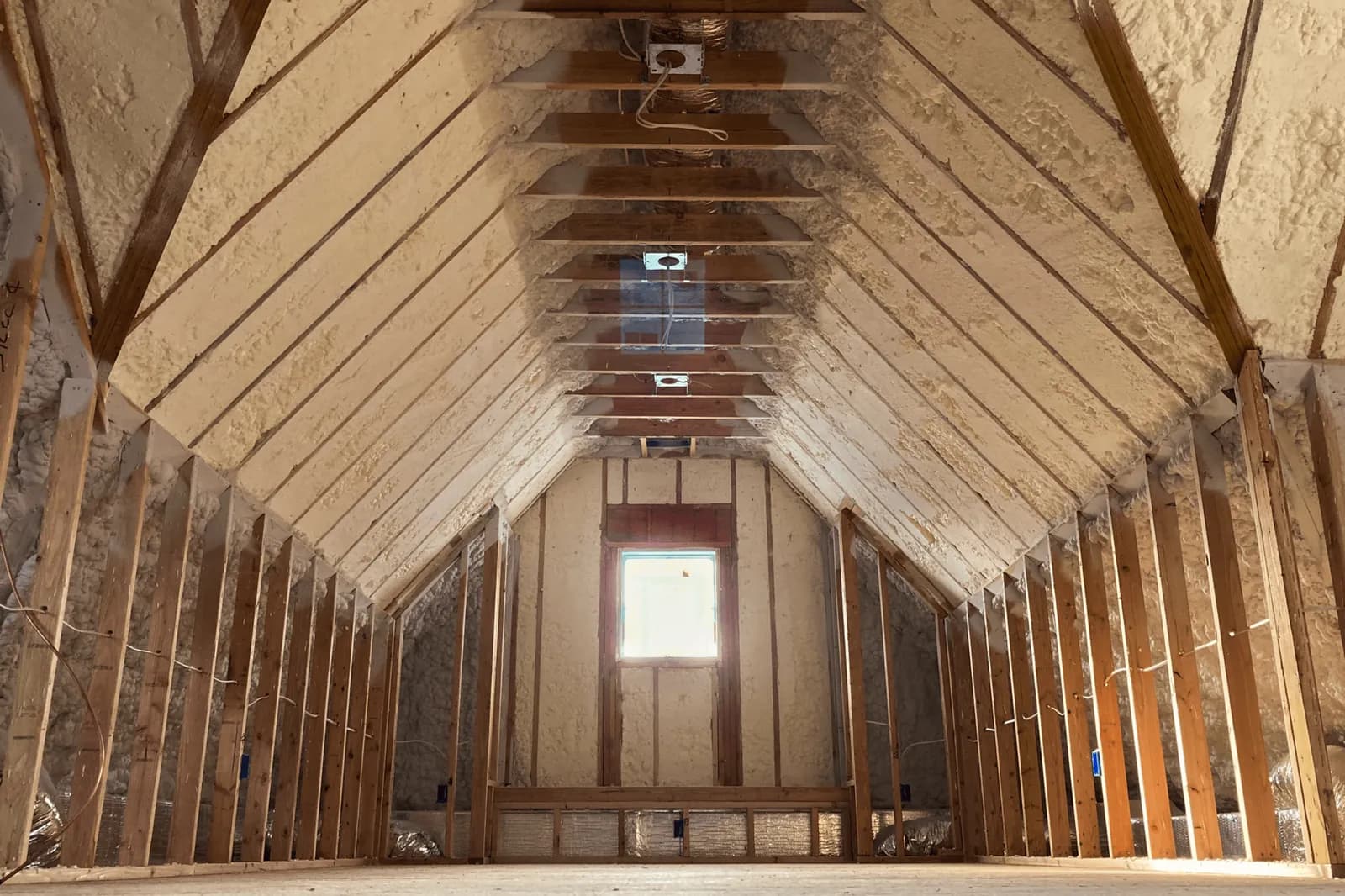
Stop the heat from reaching the roof deck. That means two things, in this order: make the ceiling airtight, then bring the insulation up to where it should be. In an unfinished attic we air-seal the attic floor, correct the thin spots and bring the whole space up to full R-value with blown cellulose or fiberglass. In a finished attic, a bonus room or a cathedral ceiling, where there is no attic floor to seal, we spray foam the underside of the roof deck so the roof stays cold and the room below stays warm. Closed-cell foam gives the highest R-value per inch, which is what tight rafter bays need.
Attic ventilation matters too, but it comes after the sealing. Venting first can pull even more warm house air up through an unsealed ceiling.
If you have ice dams this winter
Do not climb up to chip at them, and do not repair the ceiling stains until the heat loss that caused them is fixed, or the stains will come back. Note where the ice forms; the heat is escaping on the roof above it. Then have the attic looked at before next winter. We find where the heat is leaving, seal it, and insulate to the way the house is built.